
 E-submission
 KSPEN
KSPEN KSSMN
KSSMN ASSMN
ASSMN JSSMN
JSSMNIndexed in:
Scopus, KCI, KoreaMed
Scopus, KCI, KoreaMed

Search
- Page Path
- HOME > Search
Original Article
- Association between vitamin D deficiency and psychological distress in Korean adults: a population-based cross-sectional study
-
Minyoung Baek
 , Jiyoung Jung, Hyojung Kang, Hyunah Kim
 - Ann Clin Nutr Metab 2026;18(2):145-153. Published online July 31, 2026
- DOI: https://doi.org/10.15747/ACNM.26.0047
-
 Graphical Abstract
 Abstract
 PDF
PDF Supplementary Material
 - Purpose
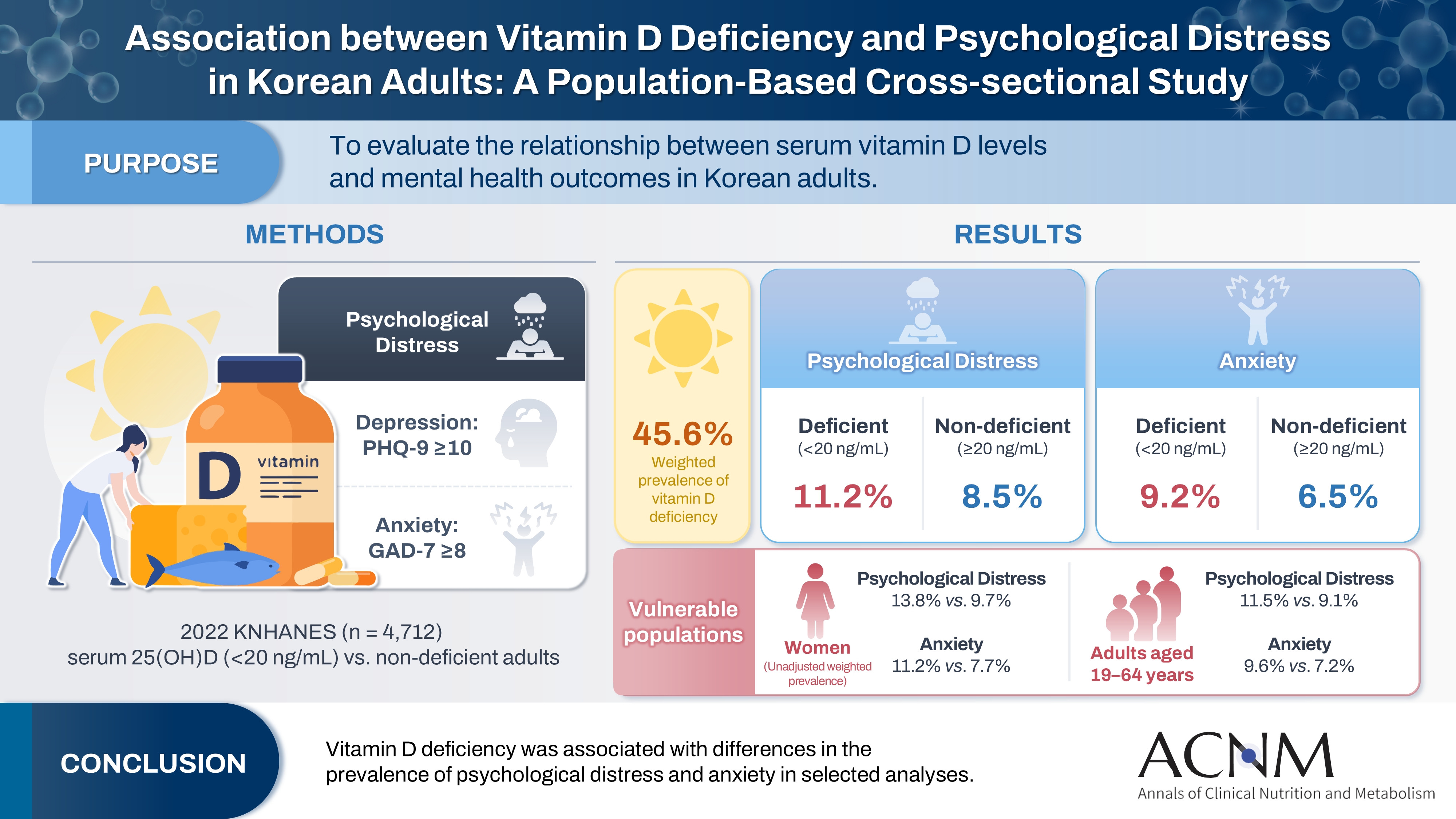
Vitamin D deficiency is prevalent in Korea, but evidence on its association with psychological distress remains limited. This study examined the association between vitamin D levels and psychological distress, depression, and anxiety, among Korean adults.
Methods
This cross-sectional study included 4,712 adults aged ≥19 years from the 2022 KNHANES. Participants were classified as vitamin D-deficient (<20 ng/mL) or non-deficient (≥20 ng/mL) groups. Psychological distress, depression, and anxiety were assessed using the Patient Health Questionnaire-9 and Generalized Anxiety Disorder-7. Multivariable logistic regression was used to estimate adjusted odds ratios for these outcomes according to vitamin D status.
Results
The weighted prevalence of vitamin D deficiency was 45.6%. Unadjusted analyses showed higher prevalences of psychological distress (11.2% vs. 8.5%; P=0.004) and anxiety (9.2% vs. 6.5%; P=0.005) in the deficient group, especially among women and adults aged 19–64 years. After adjustment, the associations were attenuated and not statistically significant in the total population. In age-stratified models, vitamin D deficiency remained significantly associated with psychological distress in adults aged 19–64 years and ≥65 years and with anxiety in adults aged 19–64 years.
Conclusion
Although psychological distress was more prevalent in the vitamin D-deficient group before adjustment, the association was not statistically significant after covariate adjustment in the total population. Subgroup analyses showed higher unadjusted prevalences of psychological distress and anxiety among women with vitamin D deficiency. Adjusted models showed significant associations with psychological distress in both age groups. These findings suggest potential subgroup-specific associations, warranting longitudinal studies to confirm causality.
- 1,267 View
- 19 Download

 First
First Prev
Prev


