
 E-submission
 KSPEN
KSPEN KSSMN
KSSMN ASSMN
ASSMN JSSMN
JSSMNIndexed in:
Scopus, KCI, KoreaMed
Scopus, KCI, KoreaMed

Articles
- Page Path
- HOME > Ann Clin Nutr Metab > Volume 18(2); 2026 > Article
- Original Article Association between vitamin D deficiency and psychological distress in Korean adults: a population-based cross-sectional study
-
Minyoung Baek1
 , Jiyoung Jung1, Hyojung Kang1, Hyunah Kim1,2
 -
Annals of Clinical Nutrition and Metabolism 2026;18(2):145-153.
DOI: https://doi.org/10.15747/ACNM.26.0047
Published online: July 31, 2026
1College of Pharmacy, Sookmyung Women’s University, Seoul, Korea
2Drug Information Research Institute, Sookmyung Women’s University, Seoul, Korea
- Corresponding author: Hyunah Kim, email: hyunah@sookmyung.ac.kr
• Received: February 15, 2026 • Revised: April 4, 2026 • Accepted: May 29, 2026
© 2026 The Korean Society of Surgical Metabolism and Nutrition · The Korean Society for Parenteral and Enteral Nutrition · Asian Society of Surgical Metabolism and Nutrition
This is an Open Access article distributed under the terms of the Creative Commons Attribution Non-Commercial License (http://creativecommons.org/licenses/by-nc/4.0), which permits unrestricted non-commercial use, distribution, and reproduction in any medium, provided the original work is properly cited.
- 1,265 Views
- 19 Download


Abstract
-
Purpose Vitamin D deficiency is prevalent in Korea, but evidence on its association with psychological distress remains limited. This study examined the association between vitamin D levels and psychological distress, depression, and anxiety among Korean adults.
-
Methods This cross-sectional study included 4,712 adults aged ≥19 years from the 2022 Korea National Health and Nutrition Examination Survey (KNHANES). Participants were classified as vitamin D-deficient (<20 ng/mL) or non-deficient (≥20 ng/mL) groups. Psychological distress, depression, and anxiety were assessed using the Patient Health Questionnaire-9 and Generalized Anxiety Disorder-7. Multivariable logistic regression was used to estimate adjusted odds ratios for these outcomes according to vitamin D status.
-
Results The weighted prevalence of vitamin D deficiency was 45.6%. Unadjusted analyses showed higher prevalences of psychological distress (11.2% vs. 8.5%; P=0.004) and anxiety (9.2% vs. 6.5%; P=0.005) in the deficient group, especially among women and adults aged 19–64 years. After adjustment, the associations were attenuated and not statistically significant in the total population. In age-stratified models, vitamin D deficiency remained significantly associated with psychological distress in adults aged 19–64 years and ≥65 years and with anxiety in adults aged 19–64 years.
-
Conclusion Although psychological distress was more prevalent in the vitamin D-deficient group before adjustment, the association was not statistically significant after covariate adjustment in the total population. Subgroup analyses showed higher unadjusted prevalences of psychological distress and anxiety among women with vitamin D deficiency. Adjusted models showed significant associations with psychological distress in both age groups. These findings suggest potential subgroup-specific associations, warranting longitudinal studies to confirm causality.
Graphical abstract
Introduction
Psychological distress, including depression and anxiety, is a widespread public health problem globally [1]. It imposes a substantial socioeconomic burden, reduces quality of life, and is associated with increased risks of mortality and suicide [2,3]. Recent data show a marked increase in the global burden of mental disorders, with depression and anxiety as the leading contributors [4]. This rising prevalence poses a challenge for clinical care because psychological comorbidities can complicate management and prognosis. Korea follows this global pattern; in the 2021 Survey of Mental Health, one in four Korean adults reported experiencing a mental disorder at least once during their lifetime [5].
The association between micronutrients and mental health has received considerable attention, and vitamin D has been a particular focus. In addition to its role in bone metabolism, vitamin D functions as a neurosteroid: vitamin D receptor (VDR) is widely distributed in brain regions involved in emotion regulation, and vitamin D contributes to the synthesis of neurotransmitters such as serotonin [6]. Vitamin D deficiency remains a common public health problem and is especially pronounced in Korea. An analysis of the 2008–2014 Korea National Health and Nutrition Examination Survey (KNHANES) found that adult vitamin D deficiency (<50 nmol/L) was present in 65.7% of men and 76.7% of women, a prevalence markedly higher than that reported in Western countries [7]. This high prevalence in Korea may reflect the combined effects of predominantly indoor lifestyles, inadequate sun exposure, widespread sunscreen use, and insufficient dietary vitamin D intake [8].
However, few studies have evaluated the association between vitamin D deficiency and standardized mental health measures in large Korean populations. Although the KNHANES includes validated screening tools, including the Patient Health Questionnaire-9 (PHQ-9) and Generalized Anxiety Disorder-7 (GAD-7), research using these measures to assess psychological distress, defined to encompass both depression and anxiety, remains limited [9].
This study aimed to investigate the association between vitamin D deficiency and psychological distress in Korean adults using nationally representative data.
Methods
The primary KNHANES protocol was approved by the Institutional Review Board (IRB) of the Korea Disease Control and Prevention Agency (IRB No. 2018-01-03-4C-A). The present study was exempted from review by the IRB of Sookmyung Women's University (IRB No. SMWU-2509-HR-076) because it used publicly available, anonymized data.
This cross-sectional study used data from the 2022 KNHANES. KNHANES is a nationwide, population-based survey that uses a complex, stratified, multistage probability sampling design to assess the health and nutritional status of the Korean population. The 2022 survey measured serum vitamin D concentrations, including 25-hydroxyvitamin D2 [25(OH)D2] and 25-hydroxyvitamin D3 [25(OH)D3], and administered the PHQ-9 and GAD-7 to adults aged ≥19 years.
Among all 2022 KNHANES participants, adults aged ≥19 years were initially selected. Participants were included in the final analysis only if they had complete data on serum vitamin D concentrations, PHQ-9 scores, and GAD-7 scores. Participants with missing data for more than one key variable were counted only once in the overall exclusion count. Therefore, the sum of the variable-specific missing counts shown in Fig. 1 exceeds the total number of excluded individuals (n=610), reflecting overlapping missingness for vitamin D, PHQ-9, and GAD-7. The final analytic sample included 4,712 participants. To examine demographic differences, analyses were stratified by sex and age group (19–64 years and ≥65 years).
In the 2022 KNHANES, serum 25(OH)D2, 25(OH)D3, and 3-epi-25(OH)D3 concentrations were measured at GC Labs using liquid chromatography–tandem mass spectrometry, in accordance with the KNHANES IX (2022–2023) laboratory protocol [9]. Serum vitamin D level was defined as the sum of 25(OH)D2 and 25(OH)D3 concentrations. For samples with 25(OH)D2 levels below the limit of detection (<0.30 ng/mL), the value was treated as 0, and total vitamin D level was calculated from the 25(OH)D3 concentration. Participants were classified according to the Endocrine Society clinical practice guideline as vitamin D-deficient (<20 ng/mL) or non-deficient (≥20 ng/mL) [10].
Mental health outcomes were assessed using the PHQ-9 for depression and the GAD-7 for anxiety. Both instruments were administered as part of the 2022 KNHANES [9] and assessed symptoms during the preceding 2 weeks, with each item scored on a 0–3-point scale. The PHQ-9 includes 9 items (total score range, 0–27), with scores ≥10 indicating clinically significant depressive symptoms [11]. The GAD-7 includes 7 items (total score range, 0–21), with scores ≥8 widely accepted as the clinical cutoff for anxiety [12]. Psychological distress was defined as meeting the criterion for either depression (PHQ-9 ≥10) or anxiety (GAD-7 ≥8). The primary outcomes were the prevalence of psychological distress, depression, and anxiety. Secondary outcomes were symptom severity scores, measured as mean PHQ-9 and GAD-7 scores.
To adjust for potential confounding of mental health outcomes, sociodemographic characteristics, lifestyle factors, and health status were included as covariates. Sociodemographic variables included sex (male or female), age (19–29, 30–39, 40–49, 50–59, 60–69, and ≥70 years), and residential area (urban or rural). Lifestyle variables included sleep duration (≤5, 6–8, or ≥9 hours), current alcohol consumption (yes or no), and current smoking status (yes or no). According to official KNHANES definitions, current alcohol consumption was defined as drinking alcohol at least once per month during the past year, and current smoking was defined as having smoked ≥100 cigarettes during one’s lifetime and currently smoking. Health status was assessed by comorbidity status; participants were classified as having a comorbidity if they had at least one of the following: hypertension, diabetes, hypercholesterolemia, or obesity (body mass index [BMI] ≥25 kg/m²).
All statistical analyses accounted for the complex KNHANES sampling design, including stratification, clustering, and sample weights. Participant characteristics and mental health outcomes were first compared according to vitamin D status (deficient vs. non-deficient). Continuous variables were presented as means±standard errors, and categorical variables were presented as unweighted counts with survey-weighted percentages. Between-group comparisons used the t-test for continuous variables and the Rao–Scott chi-square test for categorical variables. Variables that differed significantly between vitamin D groups in the univariate analyses (P<0.05) were selected as covariates for the multivariable models. Multivariable logistic regression models adjusted for these selected covariates were then used to evaluate the associations between vitamin D deficiency and the prevalence of psychological distress, depression, and anxiety. These models were fitted using complete-case analysis; 77 participants (1.6%) with missing covariate data were excluded from the adjusted models (n=4,635).
Although perceived stress differed significantly between vitamin D groups (P=0.030), it was deliberately excluded from the multivariable models. Because perceived stress conceptually and physiologically overlaps with the outcome variables of depression and anxiety, including it as a covariate could have introduced overadjustment bias if perceived stress lay on the causal pathway rather than acting as a true confounder.
Results are reported as adjusted odds ratios (AORs) with 95% confidence intervals (CIs). Statistical significance was defined as P<0.05. All analyses were conducted using R version 4.5.1 (R Foundation for Statistical Computing).
Results
A total of 4,712 participants were included in the final analysis. The weighted prevalence of vitamin D deficiency was 45.6% (unweighted count: 1,911 in the deficient group vs. 2,801 in the non-deficient group). Participant characteristics stratified by vitamin D status are presented in Table 1. Several demographic characteristics differed between the groups. Compared with the non-deficient group, the vitamin D-deficient group was younger (mean age, 43.58 years vs. 52.68 years; P<0.001) and included a higher proportion of men (53.9% vs. 46.4%; P<0.001). Residential area also differed, with a higher proportion of urban residents in the deficient group (89.8% vs. 81.7%; P<0.001). Current alcohol use and current smoking were more common in the deficient group (P<0.001 for both). The prevalence of obesity (P=0.046) and high perceived stress (P=0.030) was also higher in the vitamin D-deficient group than in the non-deficient group.
Psychological distress was more prevalent in the vitamin D-deficient group than in the non-deficient group (11.2% vs. 8.5%; P=0.004) (Table 2). Among specific conditions, anxiety showed significant between-group differences: the deficient group had a higher prevalence of anxiety (9.2% vs. 6.5%; P=0.005) and higher mean GAD-7 scores (2.44±0.10 vs. 2.08±0.07) (P=0.002). For depression assessed with the PHQ-9, both prevalence and mean scores were numerically higher in the deficient group, but the differences were not statistically significant.
Multivariable logistic regression was used to estimate adjusted associations between vitamin D deficiency and the prevalence of psychological distress, depression, and anxiety. Fig. 2 presents the AORs after adjustment for sex, age, residential area, sleep duration, current alcohol consumption, current smoking, and comorbidities. Compared with the non-deficient reference group, the vitamin D-deficient group had an AOR of 1.20 (95% CI, 0.93–1.54) for psychological distress. The AOR for anxiety was 1.22 (95% CI, 0.91–1.63), suggesting a trend toward higher prevalence, whereas the AOR for depression was 0.97 (95% CI, 0.66–1.42). None of these associations reached statistical significance in the fully adjusted models.
The prevalence of vitamin D deficiency differed significantly by sex (49.3% in men vs. 41.9% in women; P<0.001). In sex-stratified analyses, women in the deficient group had higher prevalences of psychological distress (13.8% vs. 9.7%; P=0.007) and anxiety (11.2% vs. 7.7%; P=0.012) than women in the non-deficient group, as summarized in Table 3. In contrast, no significant differences were observed among men for psychological distress (9.1% vs. 7.1%), depression (3.6% vs. 3.6%), or anxiety (7.4% vs. 5.2%). After covariate adjustment in multivariable logistic regression models, no statistically significant associations were observed in either sex.
By age, vitamin D deficiency was less prevalent in older adults (≥65 years) than in adults aged 19–64 years (30.4% vs. 49.3%; P<0.001). In unadjusted analyses, significant differences were limited to adults aged 19–64 years. In this group, psychological distress (11.5% vs. 9.1%; P=0.028) and anxiety (9.6% vs. 7.2%; P=0.023) were more prevalent in the vitamin D-deficient group than in the non-deficient group. By contrast, among older adults, the prevalence of psychological distress, depression, and anxiety did not differ significantly by vitamin D status. However, in fully adjusted models, vitamin D deficiency remained significantly associated with psychological distress in both age groups (AOR, 1.31; 95% CI, 1.02–1.68 for 19–64 years; AOR, 1.68; 95% CI, 1.03–2.75 for ≥65 years) and with anxiety among adults aged 19–64 years (AOR, 1.41; 95% CI, 1.06–1.87).
Additional subgroup analyses by lifestyle and health-related factors, including alcohol consumption, smoking, obesity, and perceived stress, showed no statistically significant associations in adjusted models, although a marginal trend was observed among participants who consumed alcohol (Supplement 1). A sensitivity analysis using a higher BMI threshold for obesity (≥30 kg/m²) produced results consistent with the primary analysis (Supplement 2).
Discussion
This study examined the association between vitamin D deficiency and mental health outcomes, including psychological distress, depression, and anxiety, using nationally representative data from the 2022 KNHANES. In unadjusted analyses, psychological distress and anxiety were more prevalent in the vitamin D-deficient group. After adjustment for potential confounders, including sex, age, and lifestyle factors, these associations were attenuated and were not statistically significant in the general population or in sex-stratified analyses. Nevertheless, unadjusted sex-stratified analyses showed higher prevalences of psychological distress and anxiety among women with vitamin D deficiency. In age-stratified adjusted analyses, vitamin D deficiency remained significantly associated with psychological distress in adults aged 19–64 years and those aged ≥65 years and with anxiety in adults aged 19–64 years.
The finding that vitamin D deficiency was not significantly associated with depression in the fully adjusted model for the total population is consistent with a previous study by Ma and Li [13], which analyzed U.S. National Health and Nutrition Examination Survey data from 2007 to 2018. That study also reported that the association between vitamin D levels and depressive symptoms was no longer significant after covariate adjustment. In contrast, the present results differ from those of Rhee et al. [14], who reported a significant association between vitamin D deficiency and depressive symptoms in men using 2014 KNHANES data. These discrepancies may reflect methodological differences, particularly in outcome definition. Rhee et al. [14] analyzed symptom severity as a continuous PHQ-9 score using negative binomial regression, whereas the present study focused on clinically relevant symptom prevalence as a categorical outcome based on established cutoff scores.
Several biological mechanisms could plausibly link vitamin D deficiency with adverse mental health outcomes. The VDR is widely distributed in mood-regulating brain regions, including the prefrontal cortex, cingulate cortex, amygdala, and hippocampus. Functionally, vitamin D may protect against serotonin depletion, regulate enzymes involved in catecholamine synthesis, reduce hypothalamic–pituitary–adrenal (HPA) axis overactivity, and suppress systemic and central inflammatory cytokines [15-17].
The stronger unadjusted association observed among women may reflect interactions between estrogen and vitamin D. Estrogen regulates the expression of VDR and vitamin D-metabolizing enzymes, specifically 25-hydroxyvitamin D 1alpha-hydroxylase and 25-hydroxyvitamin D 24-hydroxylase, as well as the serotonergic system. This biological interplay supports a potential sex-specific hypothesis: because women experience hormonal fluctuations, such as those related to menstrual cycles or menopause, they may be more susceptible than men to disruptions in VDR signaling and HPA axis regulation associated with vitamin D deficiency [18-20]. This mechanism could help explain why the unadjusted prevalence rates of psychological distress and anxiety were higher in vitamin D-deficient women than in their non-deficient counterparts.
The age-stratified results suggested associations between vitamin D deficiency and mental health outcomes in both adults aged 19–64 years and older adults aged ≥65 years, although the robustness of the findings differed. Adults aged 19–64 years are often in socially and economically active stages of life and may experience occupational stress and predominantly indoor work environments that limit sunlight exposure. For this group, adequate vitamin D status may be relevant to psychological well-being under daily stressors. In contrast, the significant adjusted association observed among older adults should be interpreted with caution. The number of prevalent psychological distress cases among older adults was small, likely contributing to the wide 95% CI and suggesting statistical instability. Future studies with larger cohorts of older adults are therefore needed to generate more precise and stable estimates.
This study has several strengths. First, it used a large, nationally representative sample of Korean adults from the 2022 KNHANES. Because the analyses accounted for the complex sample design, the estimates are applicable to the Korean adult population. Standardized KNHANES protocols for measuring serum vitamin D concentrations and administering the PHQ-9 and GAD-7 also reduce information bias and support data reliability [9]. Second, vitamin D deficiency was defined using the Endocrine Society clinical practice guideline threshold (<20 ng/mL) [10] rather than the lower threshold proposed by the Institute of Medicine (<12 ng/mL) [21]. This stricter criterion may be more relevant for assessing non-skeletal outcomes such as mental health because it captures a broader range of individuals with low vitamin D status. Finally, by using both the PHQ-9 and GAD-7, this study assessed depression and anxiety rather than depression alone [22,23].
This study also has several limitations. First, its cross-sectional design precludes causal inference about the relationship between serum vitamin D levels and psychological distress. Reverse causality remains possible, because depression or anxiety may reduce outdoor activity and sunlight exposure. Second, the PHQ-9 and GAD-7 are screening tools, not diagnostic instruments. Although these instruments are valid and reliable, high scores indicate symptom severity rather than a confirmed clinical diagnosis and should therefore be interpreted with caution. Third, seasonal variation in serum vitamin D levels could not be adjusted for. Although vitamin D synthesis is highly dependent on seasonal sunlight exposure, the publicly available KNHANES dataset excludes the specific month of examination to protect participant anonymity. The inability to control for the season of blood collection may therefore have introduced residual confounding. Finally, the analysis was restricted to the 2022 dataset because it was the only recent cycle that simultaneously provided data on both mental health instruments and serum vitamin D. Although this restriction ensured high data completeness, it precluded multi-year pooled analyses and limited the assessment of long-term trends and larger subgroup analyses. This reliance on a single-year dataset also resulted in a small number of psychological distress cases among older adults, limiting the precision of the age-stratified estimates.
Despite these limitations, the findings may help inform public health strategies related to mental health. In particular, higher unadjusted prevalences of psychological distress and anxiety were observed among women and adults aged 19–64 years, groups in which vitamin D deficiency is common. Maintaining adequate vitamin D status could be considered as one supportive component of comprehensive mental health management, although these cross-sectional findings do not establish causality. Future longitudinal studies are needed to clarify temporality and the potential causal relationship between vitamin D deficiency and mental health outcomes. Pooling multiple KNHANES cycles would also help secure adequate sample sizes across stratified groups, including older adults. This approach would clarify subgroup-specific associations and support the assessment of long-term trends.
In conclusion, this study identified a high prevalence of vitamin D deficiency among Korean adults, particularly in younger age groups. Although the association was attenuated in fully adjusted models, the unadjusted prevalence of psychological distress was higher among women with vitamin D deficiency. This pattern suggests a higher clinical burden in this subgroup despite the absence of a significant formal interaction. In age-stratified models, the association with psychological distress remained statistically significant after adjustment in adults aged 19–64 years and older adults aged ≥65 years, although the estimate for older adults was imprecise. These findings may support preventive strategies in clinical and public health settings. Given the higher burden observed in these subgroups, maintaining adequate vitamin D levels could be considered as an adjunctive component of mental health support.
Authors’ contribution
Conceptualization: MB, Hyunah Kim. Investigation: MB, JJ, Hyojung Kang, Hyunah Kim. Methodology: MB, JJ, Hyojung Kang, Hyunah Kim. Supervision: Hyunah Kim. Writing–original draft: MB, JJ, Hyojung Kang. Writing–review & editing: JJ, Hyunah Kim, Hyojung Kang. All authors read and approved the final manuscript.
Conflict of interest
The authors of this manuscript have no conflicts of interest to disclose.
Funding
None.
Data availability
The raw data supporting the conclusions presented in this article will be made available by the authors upon request.
Acknowledgments
None.
Supplementary materials
Supplementary materials can be found via https://doi.org/10.15747/ACNM.26.0047
Supplement 1.
Subgroup analyses of the adjusted association between vitamin D deficiency and psychological distress by lifestyle and health-related factors. Adjusted odds ratios and 95% confidence intervals are shown on a logarithmic scale.
Supplement 2.
Sensitivity analysis of the adjusted association between vitamin D deficiency and mental health outcomes using an obesity threshold of body mass index ≥30 kg/m².
Fig. 1.
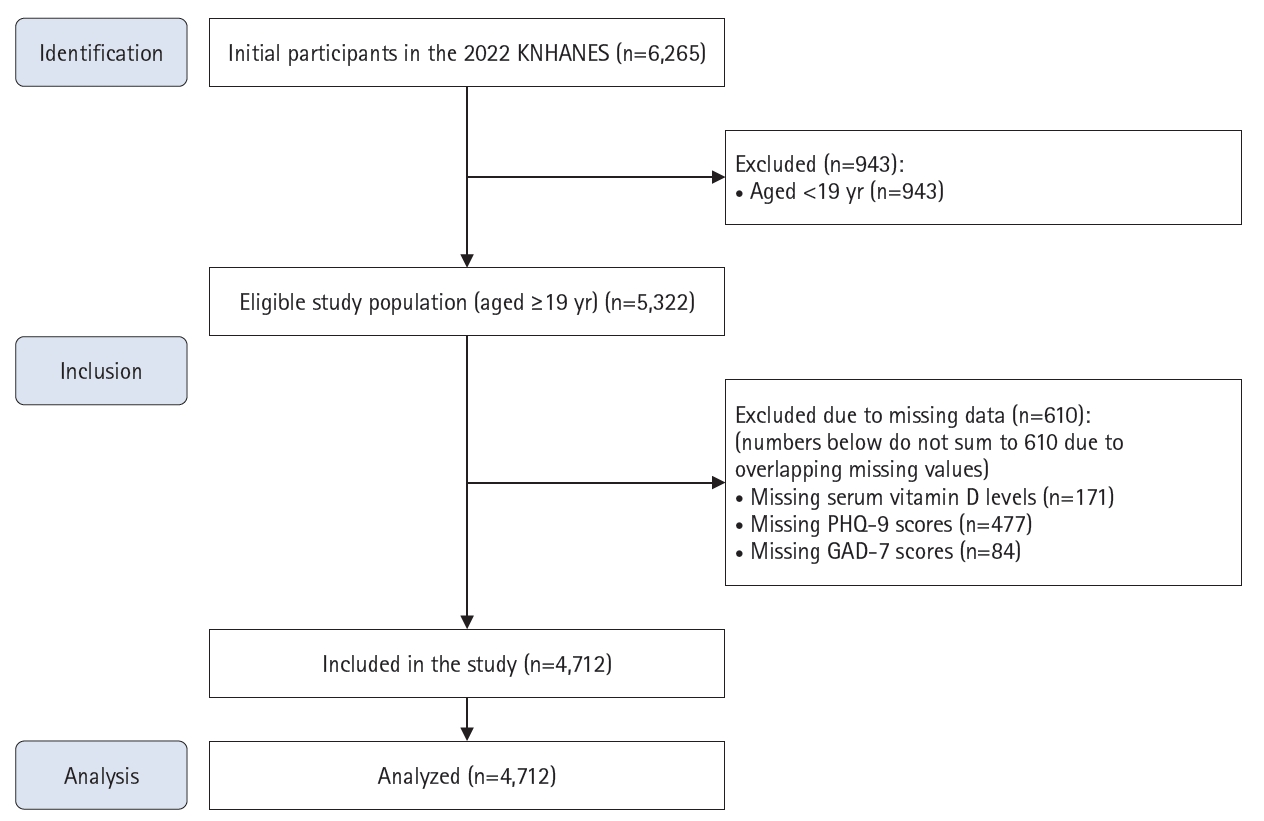
Strengthening the Reporting of Observational Studies in Epidemiology (STROBE) flow diagram showing participant selection and the final analytic sample. KNHANES, Korea National Health and Nutrition Examination Survey; PHQ-9, Patient Health Questionnaire-9; GAD-7, Generalized Anxiety Disorder-7.
Fig. 2.
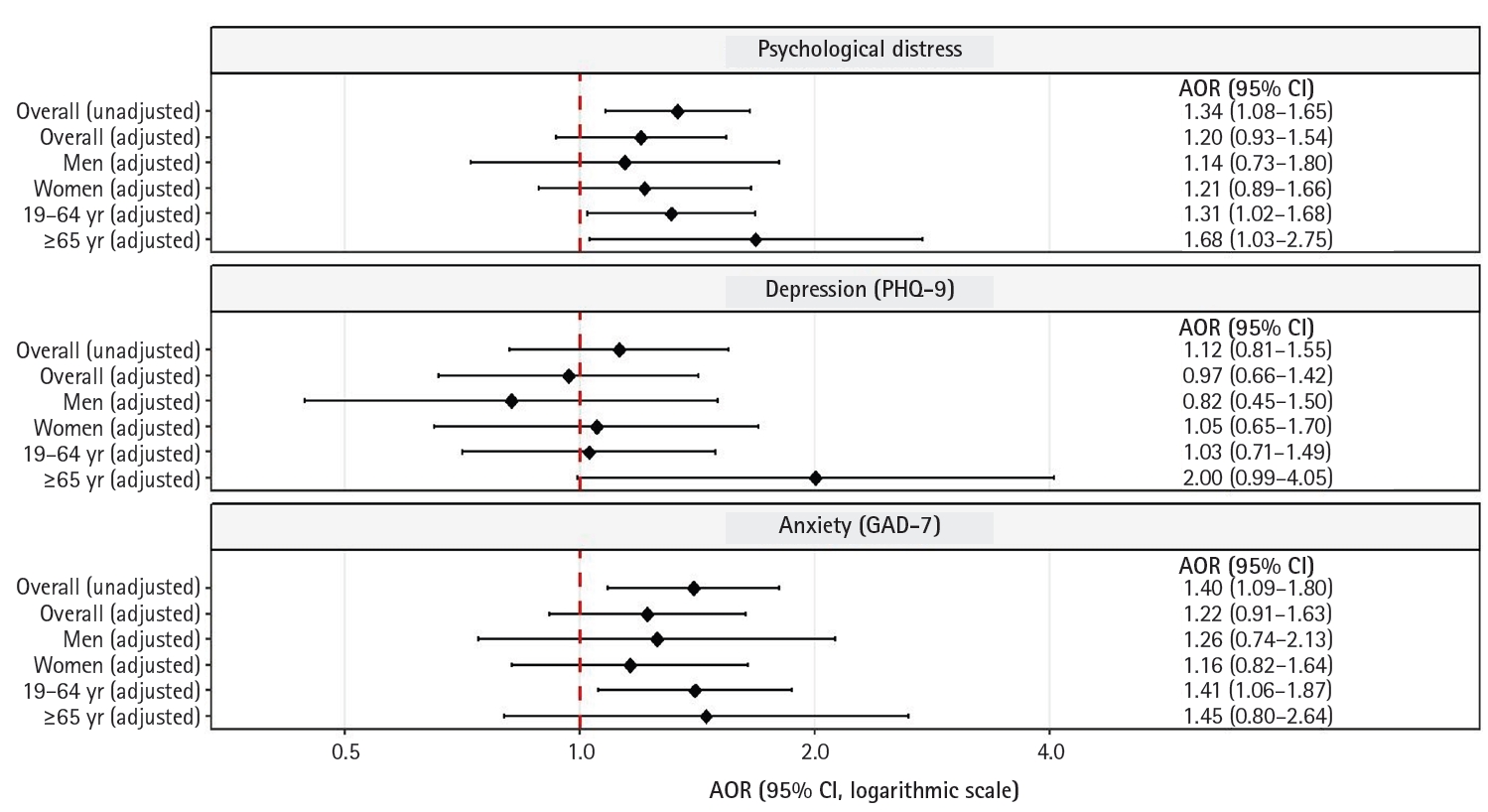
ORs/AORs and 95% CIs for mental health outcomes according to vitamin D status. Results are shown for the total population (unadjusted and multivariable-adjusted) and for subgroups stratified by sex and age. Adjusted models included age, sex, residential area, smoking status, alcohol consumption, sleep duration, and comorbidities (hypertension, diabetes, hypercholesterolemia, or obesity), as applicable. Adjusted models included 4,635 participants owing to missing data on covariates. The x-axis is shown on a logarithmic scale, and the vertical dashed line indicates the reference value (OR=1.0). OR, odds ratio; AOR, adjusted odds ratio; CI, confidence interval; PHQ-9, Patient Health Questionnaire-9; GAD-7, Generalized Anxiety Disorder-7.

Table 1.
Participant characteristics according to vitamin D status (n=4,712)
Table 2.
Comparison of the prevalence of mental health outcomes according to vitamin D status
Table 3.
Subgroup analyses of mental health outcomes according to vitamin D status
- 1. World Health Organization (WHO). Depression and other common mental disorders: global health estimates [Internet]. WHO; 2017. [cited 2025 Nov 28]. Available from: https://iris.who.int/handle/10665/254610
- 2. World Health Organization (WHO). World mental health report: transforming mental health for all [Internet]. WHO; 2022. [cited 2025 Nov 28]. Available from: https://www.who.int/publications/i/item/9789240049338
- 3. Lee H, Singh GK. Psychological distress, life expectancy, and all-cause mortality in the United States: results from the 1997-2014 NHIS-NDI record linkage study. Ann Epidemiol 2021;56:9-17. ArticlePubMed
- 4. Mao QS, Guo YX, Tian XL, Zhao HL, Kong YZ. Global burden of mental disorders in 204 countries and territories results from the Global Burden of Disease Study 2021. World J Psychiatry 2025;15:106887.ArticlePubMedPMC
- 5. Ministry of Health and Welfare (MOHW). The National Mental Health Survey of Korea 2021 [Internet]. MOHW; 2022. [cited 2025 Nov 28]. Available from: https://www.mohw.go.kr/board.es?mid=a10411010100&bid=0019&act=view&list_no=369858
- 6. Baik HW. Mental health and micronutrients: a narrative review. Ann Clin Nutr Metab 2024;16:112-9. Article
- 7. Park JH, Hong IY, Chung JW, Choi HS. Vitamin D status in South Korean population: seven-year trend from the KNHANES. Medicine (Baltimore) 2018;97:e11032. ArticlePubMedPMC
- 8. Choi HS, Oh HJ, Choi H, Choi WH, Kim JG, Kim KM, et al. Vitamin D insufficiency in Korea: a greater threat to younger generation: the Korea National Health and Nutrition Examination Survey (KNHANES) 2008. J Clin Endocrinol Metab 2011;96:643-51. ArticlePubMed
- 9. Korea Disease Control and Prevention Agency (KDCA). Guidelines for the use of raw data of the Korea National Health and Nutrition Examination Survey (KNHANES) IX (2022-2023) [Internet]. KDCA; 2025. [cited 2025 Nov 28]. Available from: https://knhanes.kdca.go.kr/
- 10. Holick MF, Binkley NC, Bischoff-Ferrari HA, Gordon CM, Hanley DA, Heaney RP, et al. Evaluation, treatment, and prevention of vitamin D deficiency: an Endocrine Society clinical practice guideline. J Clin Endocrinol Metab 2011;96:1911-30. ArticlePubMed
- 11. Kroenke K, Spitzer RL, Williams JB. The PHQ-9: validity of a brief depression severity measure. J Gen Intern Med 2001;16:606-13. ArticlePubMedPMC
- 12. Plummer F, Manea L, Trepel D, McMillan D. Screening for anxiety disorders with the GAD-7 and GAD-2: a systematic review and diagnostic meta-analysis. Gen Hosp Psychiatry 2016;39:24-31. ArticlePubMed
- 13. Ma J, Li K. Negative association between serum vitamin D levels and depression in a young adult US population: a cross-sectional study of NHANES 2007-2018. Nutrients 2023;15:2947.ArticlePubMedPMC
- 14. Rhee SJ, Lee H, Ahn YM. Serum vitamin D concentrations are associated with depressive symptoms in men: the sixth Korea National Health and Nutrition Examination Survey 2014. Front Psychiatry 2020;11:756.ArticlePubMedPMC
- 15. Wassif GA, Alrehely MS, Alharbi DM, Aljohani AA. The impact of vitamin D on neuropsychiatric disorders. Cureus 2023;15:e47716. ArticlePubMedPMC
- 16. Menon V, Kar SK, Suthar N, Nebhinani N. Vitamin D and depression: a critical appraisal of the evidence and future directions. Indian J Psychol Med 2020;42:11-21. ArticlePubMedPMCPDF
- 17. Akpınar S, Karadag MG. Is vitamin D important in anxiety or depression? What is the truth? Curr Nutr Rep 2022;11:675-81. ArticlePubMedPMCPDF
- 18. Gilad LA, Bresler T, Gnainsky J, Smirnoff P, Schwartz B. Regulation of vitamin D receptor expression via estrogen-induced activation of the ERK 1/2 signaling pathway in colon and breast cancer cells. J Endocrinol 2005;185:577-92. ArticlePubMed
- 19. Dennis C, Dillon J, Cohen DJ, Halquist MS, Pearcy AC, Schwartz Z, et al. Local production of active vitamin D3 metabolites in breast cancer cells by CYP24A1 and CYP27B1. J Steroid Biochem Mol Biol 2023;232:106331.ArticlePubMed
- 20. Bendis PC, Zimmerman S, Onisiforou A, Zanos P, Georgiou P. The impact of estradiol on serotonin, glutamate, and dopamine systems. Front Neurosci 2024;18:1348551.ArticlePubMedPMC
- 21. Institute of Medicine. Dietary reference intakes for calcium and vitamin D. National Academies Press; 2011.
- 22. Negeri ZF, Levis B, Sun Y, He C, Krishnan A, Wu Y, et al. Accuracy of the Patient Health Questionnaire-9 for screening to detect major depression: updated systematic review and individual participant data meta-analysis. BMJ 2021;375:n2183.ArticlePMC
- 23. Spitzer RL, Kroenke K, Williams JB, Lowe B. A brief measure for assessing Generalized Anxiety Disorder: the GAD-7. Arch Intern Med 2006;166:1092-7. ArticlePubMed
References
Figure & Data
REFERENCES
Citations
Citations to this article as recorded by 
 Cite
Cite XML Download
Association between vitamin D deficiency and psychological distress in Korean adults: a population-based cross-sectional study
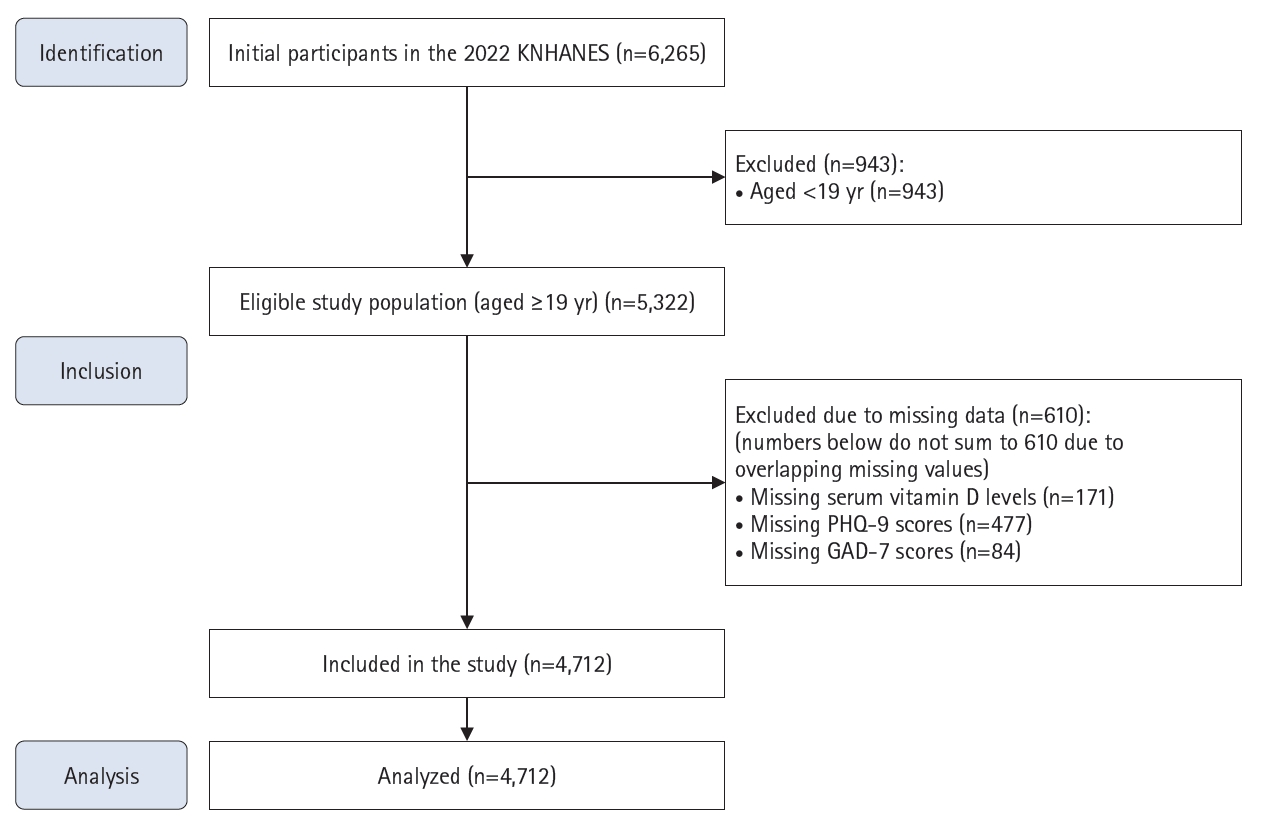
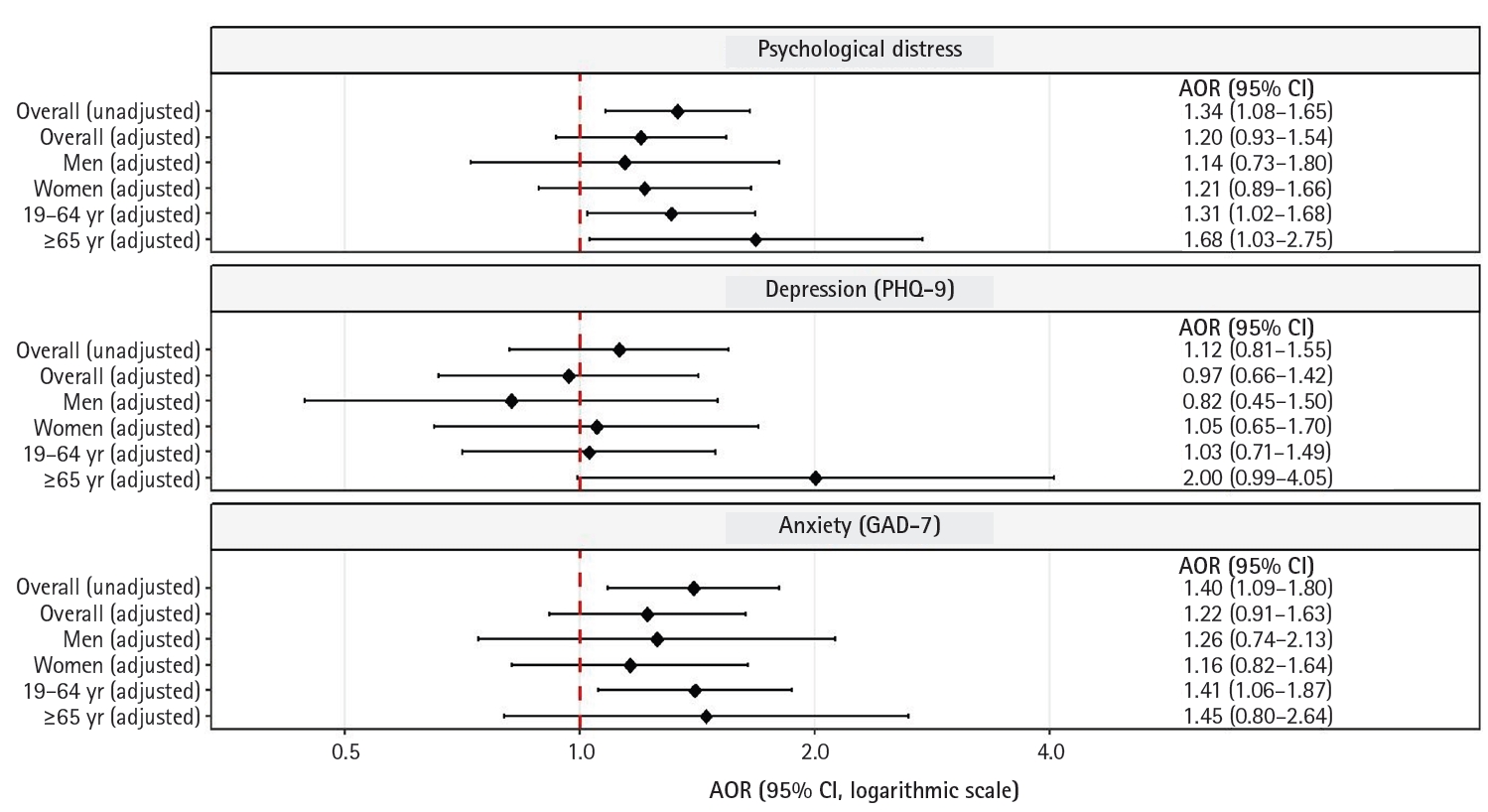
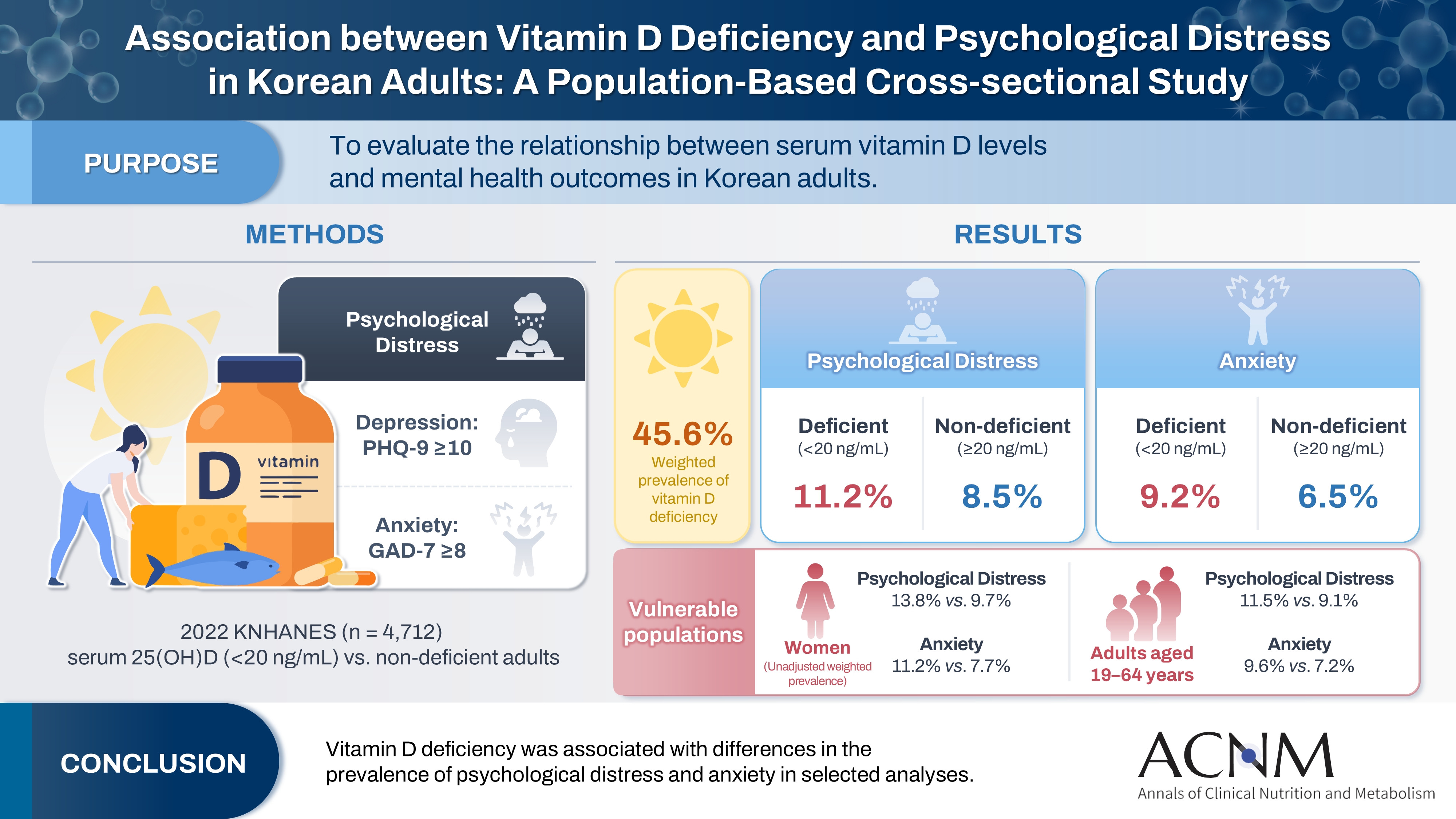
Fig. 1. Strengthening the Reporting of Observational Studies in Epidemiology (STROBE) flow diagram showing participant selection and the final analytic sample. KNHANES, Korea National Health and Nutrition Examination Survey; PHQ-9, Patient Health Questionnaire-9; GAD-7, Generalized Anxiety Disorder-7.
Fig. 2. ORs/AORs and 95% CIs for mental health outcomes according to vitamin D status. Results are shown for the total population (unadjusted and multivariable-adjusted) and for subgroups stratified by sex and age. Adjusted models included age, sex, residential area, smoking status, alcohol consumption, sleep duration, and comorbidities (hypertension, diabetes, hypercholesterolemia, or obesity), as applicable. Adjusted models included 4,635 participants owing to missing data on covariates. The x-axis is shown on a logarithmic scale, and the vertical dashed line indicates the reference value (OR=1.0). OR, odds ratio; AOR, adjusted odds ratio; CI, confidence interval; PHQ-9, Patient Health Questionnaire-9; GAD-7, Generalized Anxiety Disorder-7.
Graphical abstract
Fig. 1.
Fig. 2.
Graphical abstract
Association between vitamin D deficiency and psychological distress in Korean adults: a population-based cross-sectional study
| Parameter | Vitamin D non-deficient (n=2,801) | Vitamin D deficient (n=1,911) | P-value |
|---|---|---|---|
| Sex | <0.001 | ||
| Men | 1,155 (46.4) | 888 (53.9) | |
| Women | 1,646 (53.6) | 1,023 (46.1) | |
| Age (yr) | 52.68±0.56 | 43.58±0.57 | <0.001 |
| Age group | <0.001 | ||
| 19–29 yr | 167 (8.9) | 408 (27.6) | |
| 30–39 yr | 312 (14.7) | 286 (16.7) | |
| 40–49 yr | 396 (17.4) | 387 (19.9) | |
| 50–59 yr | 514 (21.5) | 303 (16.4) | |
| 60–69 yr | 755 (21.5) | 264 (10.9) | |
| ≥70 yr | 657 (16.0) | 263 (8.6) | |
| Household income | 0.075 | ||
| Q1 (lowest) | 605 (16.4) | 327 (14.2) | |
| Q2–Q4 (higher) | 2,195 (83.6) | 1,583 (85.8) | |
| Residence | <0.001 | ||
| Rural | 715 (18.3) | 274 (10.2) | |
| Urban | 2,086 (81.7) | 1,637 (89.8) | |
| Sleep duration | 0.007 | ||
| ≤5 hr | 460 (15.6) | 243 (11.8) | |
| 6–8 hr | 2,184 (79.6) | 1,553 (83.1) | |
| ≥9 hr | 155 (4.8) | 113 (5.1) | |
| Current alcohol use (yes) | 1,341 (51.1) | 1,053 (58.4) | <0.001 |
| Current smoking (yes) | 357 (13.9) | 338 (20.0) | <0.001 |
| Regular aerobic exercise | 1,241 (48.8) | 930 (51.7) | 0.083 |
| Perceived stress | 0.030 | ||
| Low | 2,194 (76.1) | 1,388 (72.6) | |
| High | 605 (23.9) | 523 (27.4) | |
| Comorbidities | |||
| Hypertension | 1,035 (31.9) | 538 (24.6) | <0.001 |
| Diabetes mellitus | 417 (13.6) | 247 (10.7) | 0.006 |
| Hypercholesterolemia | 939 (30.9) | 467 (22.6) | <0.001 |
| Obesity | 950 (35.6) | 714 (39.1) | 0.046 |
| Anemia | 277 (8.2) | 216 (9.3) | 0.221 |
| Variable | Vitamin D non-deficient (n=2,801) | Vitamin D deficient (n=1,911) | P-value |
|---|---|---|---|
| Psychological distress | |||
| Prevalence | 238 (8.5) | 223 (11.2) | 0.004 |
| Depression (PHQ-9) | |||
| Prevalence (score ≥10) | 117 (4.3) | 99 (4.9) | 0.463 |
| Score | 2.33±0.07 | 2.53±0.09 | 0.079 |
| Anxiety (GAD-7) | |||
| Prevalence (score ≥8) | 181 (6.5) | 179 (9.2) | 0.005 |
| Score | 2.08±0.07 | 2.44±0.10 | 0.002 |
| Subgroups | Vitamin D status | Psychological distress | Depression | Anxiety |
|---|---|---|---|---|
| Sex | ||||
| Men | Non-deficient (n=1,155) | 72 (7.1) | 34 (3.6) | 55 (5.2) |
| Deficient (n=888) | 77 (9.1) | 31 (3.6) | 61 (7.4) | |
| P-value | 0.180 | 0.941 | 0.119 | |
| Women | Non-deficient (n=1,646) | 166 (9.7) | 83 (4.9) | 126 (7.7) |
| Deficient (n=1,023) | 146 (13.8) | 68 (6.4) | 118 (11.2) | |
| P-value | 0.007 | 0.182 | 0.012 | |
| Age group | ||||
| 19–64 yr | Non-deficient (n=1,744) | 163 (9.1) | 81 (4.8) | 130 (7.2) |
| Deficient (n=1,522) | 187 (11.5) | 81 (4.9) | 155 (9.6) | |
| P-value | 0.028 | 0.905 | 0.023 | |
| ≥65 yr | Non-deficient (n=1,027) | 75 (6.5) | 36 (3.0) | 51 (4.5) |
| Deficient (n=389) | 36 (9.4) | 18 (4.7) | 24 (6.1) | |
| P-value | 0.111 | 0.162 | 0.310 |
Table 1. Participant characteristics according to vitamin D status (n=4,712)
Values are presented as unweighted counts (weighted %) or mean±standard error.
Table 2. Comparison of the prevalence of mental health outcomes according to vitamin D status
Values are presented as unweighted counts (weighted %) or mean±SE. PHQ-9, Patient Health Questionnaire-9; SE, standard error; GAD-7, Generalized Anxiety Disorder-7.
Table 3. Subgroup analyses of mental health outcomes according to vitamin D status
Values are presented as unweighted counts (weighted %).


