
 E-submission
 KSPEN
KSPEN KSSMN
KSSMN ASSMN
ASSMN JSSMN
JSSMNIndexed in:
Scopus, KCI, KoreaMed
Scopus, KCI, KoreaMed

Current issue
- Page Path
- HOME > Browse articles > Current issue
- Volume 18 (2); August 2026
-


Editorial
- Acute sarcopenia in critically ill patients: an emerging intensive care unit challenge
-
Kyu-Hyouck Kyoung

- Ann Clin Nutr Metab 2026;18(2):63-64. Published online July 31, 2026
- DOI: https://doi.org/10.15747/ACNM.26.0060
- 711 View
- 19 Download

Guideline
- Nutritional support for critically ill patients by the Korean Society for Parenteral and Enteral Nutrition—part II: a clinical practice guideline
-
Jae Gil Lee, You Min Sohn, Seung Hwan Lee, Yun Tae Jung, Hak-Jae Lee, Jeong Yun Park, Nak-Jun Choi, Jung Mi Song, Jee Young Lee, Ji Yeon Kim, Ji Yeong Jeong, Ye Won Sung, Eun Jeong Park, Hyun Ji Ko, Ji Yoon Cho, Bomi Kim, Yesung Oh, In Chung Lee, Jin Young Lee, A Ram Kim, Jee Yeon Lee, Seong-Eun Kim, Tae Sun Ha, Min Kwan Kwon
- Ann Clin Nutr Metab 2026;18(2):65-116. Published online July 31, 2026
- DOI: https://doi.org/10.15747/ACNM.26.0059
-
 Abstract
 PDF
PDF Supplementary Material
 - Purpose
Nutritional therapy is an essential component of intensive care management. Appropriate nutritional support may reduce infectious and metabolic complications and promote recovery in critically ill patients. However, nutritional practices vary across institutions, and international guidelines may not be directly applicable to clinical practice in Korea. Evidence-based clinical practice guidelines that reflect Korean intensive care unit practice are therefore needed.
Methods
The Korean Society for Parenteral and Enteral Nutrition developed these clinical practice guidelines for nutritional therapy in critically ill adults through a systematic literature review and multidisciplinary expert consensus.
Results
In total, 24 key clinical questions and 59 recommendations were developed. The guidelines address enteral and parenteral nutrition, feeding intolerance, aspiration prevention, energy and protein assessment, immune-modulating nutrition, micronutrient supplementation, refeeding syndrome, and disease-specific nutritional therapy for critically ill adults, including those with acute kidney injury, acute liver failure, acute respiratory distress syndrome, sepsis, trauma, and obesity. The recommendations emphasize individualized nutritional therapy according to hemodynamic status, metabolic phase, organ dysfunction, nutritional risk, and treatment goals.
Conclusion
These guidelines provide practical, evidence-based recommendations for nutritional therapy in critically ill adults and reflect both current international evidence and Korean clinical practice. They may support more standardized and consistent nutritional support in Korean intensive care units.
- 2,542 View
- 66 Download
Review Articles
- Mechanistic insights, clinical significance, and management strategies for postgastrectomy hypoglycemia in gastric cancer patients in the era of continuous glucose monitoring: a narrative review
-
Cheong Ah Oh
- Ann Clin Nutr Metab 2026;18(2):117-126. Published online July 31, 2026
- DOI: https://doi.org/10.15747/ACNM.25.0035
-
Abstract
PDF
- Purpose
Postgastrectomy hypoglycemia (PGH) is increasingly recognized as a potential metabolic complication after gastrectomy for gastric cancer. This narrative review summarizes its clinical relevance, underlying mechanisms, and management strategies in the era of continuous glucose monitoring.
Current concept
Traditionally considered part of the spectrum of late dumping syndrome, PGH arises from rapid nutrient transit, which leads to postprandial hyperglycemia followed by exaggerated insulin secretion and subsequent hypoglycemia. Emerging evidence suggests that glycemic disturbances after gastrectomy extend beyond symptomatic postprandial events to include asymptomatic and nocturnal hypoglycemia, as well as marked glycemic variability. Proposed mechanisms include postprandial hyperinsulinemia mediated by incretin hormones, particularly glucagon-like peptide-1, peptide YY, and glucose-dependent insulinotropic polypeptide. These disturbances may contribute to fatigue, impaired concentration, nutritional deterioration, and increased vulnerability to adverse events. Dietary modification, including frequent small meals emphasizing low–glycemic-index carbohydrates with adequate protein and fiber, remains the cornerstone of management. Pharmacologic interventions may be considered in refractory cases, although evidence specific to PGH remains limited and is often extrapolated from related conditions.
Conclusion
PGH after gastrectomy for gastric cancer is an underrecognized but clinically meaningful metabolic disturbance. Greater awareness and individualized management are essential to mitigate long-term nutritional and functional consequences. Further research is needed to clarify its mechanisms and establish evidence-based management strategies.
- 592 View
- 14 Download
- Nutritional insights in endodontics: a review of micronutrients in root canal therapy
-
Aswin Krishnamurthy
 , Nandhini Sundaresan, Vivekananthan Govindaraj, Sanjay Raamakrishnan
 - Ann Clin Nutr Metab 2026;18(2):127-137. Published online July 31, 2026
- DOI: https://doi.org/10.15747/ACNM.26.0045
-
Abstract
PDF
- Purpose
Micronutrients play critical and multifaceted roles in the biological processes governing endodontic healing. This review aimed to evaluate the therapeutic roles of essential micronutrients, including vitamin D, vitamin C, calcium, zinc, magnesium, and selenium, in modulating immune responses, promoting tissue repair, and enhancing bone regeneration during endodontic healing.
Current concept
The findings indicate that vitamin D supports odontoblast differentiation, immune regulation, and modulation of inflammatory pathways, whereas vitamin C enhances collagen synthesis, antioxidant protection, and pulp regeneration. Calcium and phosphorus are vital for hydroxyapatite formation and dentin mineralization, whereas zinc contributes to immune balance, enzymatic activation, and wound repair. Magnesium exhibits anti-inflammatory and bone-supportive properties, and selenium provides antioxidant and antimicrobial defense. Clinical studies have associated micronutrient deficiencies with delayed healing, increased infection risk, and reduced treatment success. Emerging innovations, such as bioactive sealants that release therapeutic minerals and diagnostic tools for nutrient profiling, highlight new directions in personalized endodontic care.
Conclusion
Integrating micronutrient assessment and targeted supplementation strategies into clinical endodontic practice may optimize healing responses, minimize inflammation, and improve long-term treatment outcomes.
- 464 View
- 15 Download
Original Articles
- Postoperative nausea and vomiting after emergent abdominal surgery in trauma patients in Korea: a multicenter retrospective observational study
-
Doo-Hun Kim, Hoonsung Park, Heejin Kim, Jihyeon Ahn, Mina Choi, Dae-Sang Lee, Tae Hwa Hong, Hang Joo Cho, Maru Kim
- Ann Clin Nutr Metab 2026;18(2):138-144. Published online July 31, 2026
- DOI: https://doi.org/10.15747/ACNM.26.0044
-
 Graphical Abstract
Abstract
PDF
Graphical Abstract
Abstract
PDF - Purpose
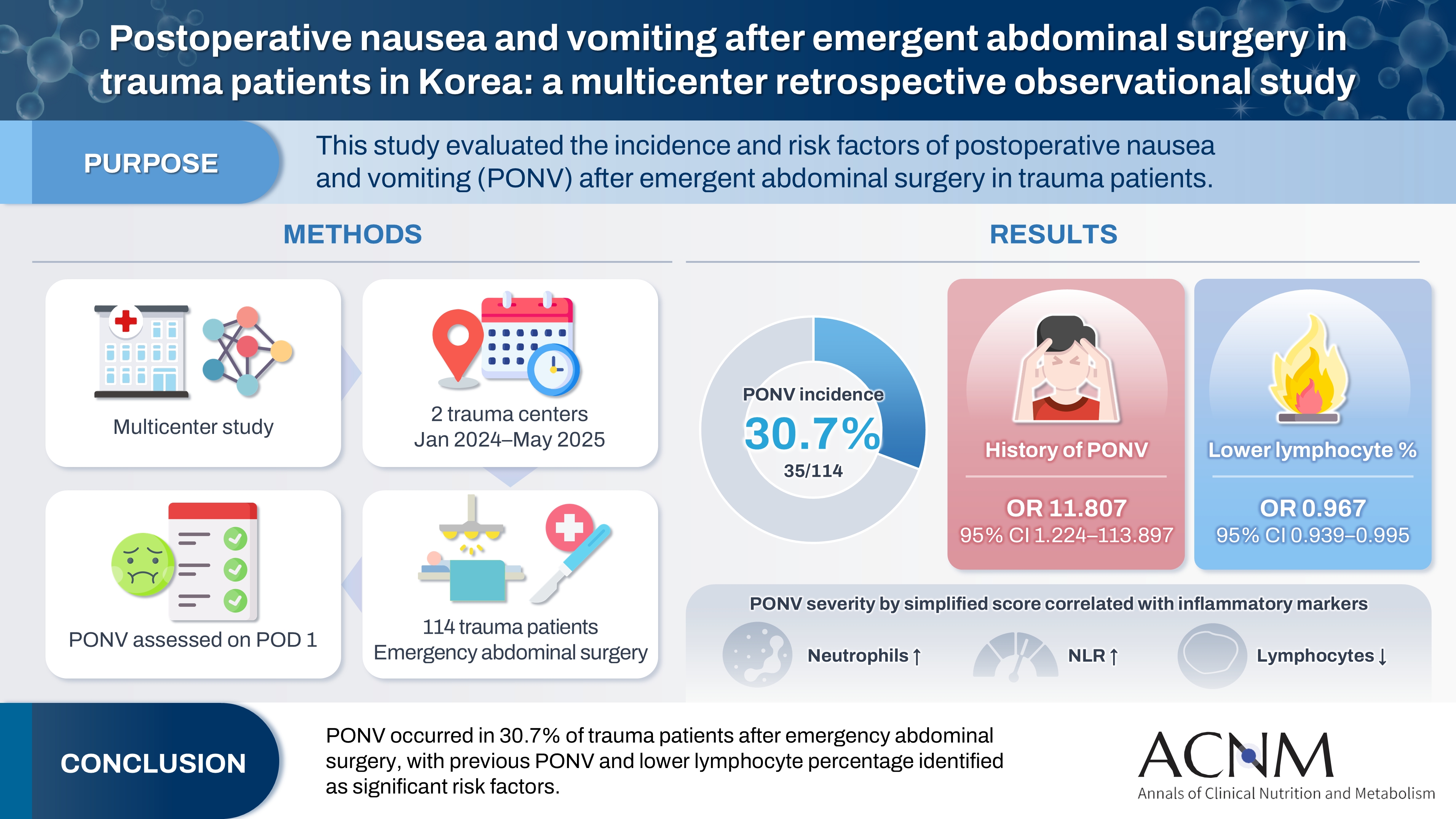
The present study aimed to assess the incidence and risk factors of postoperative nausea and vomiting (PONV) after emergency abdominal surgery in trauma patients.
Methods
This retrospective observational study included trauma patients who underwent emergency abdominal surgery at two trauma centers between January 2024 and May 2025. Medical records were reviewed according to the occurrence of PONV.
Results
A total of 114 patients were included in the analysis, of whom 35 patients (30.7%) developed PONV. Patients with a history of PONV had a higher incidence of PONV than those without such a history (80% vs. 28.4%; P=0.030). The lymphocyte percentage was lower in the PONV group (27.8% vs. 20.0%; P=0.023). In binary logistic regression analysis, previous PONV (B=2.469, P=0.033; odds ratio [OR], 11.807; 95% confidence interval [CI], 1.224–113.897) and lymphocyte percentage (B=−0.034, P=0.021; OR, 0.967; 95% CI, 0.939–0.995) were significant risk factors. PONV severity was also associated with a higher segmented neutrophil percentage, a higher neutrophil-to-lymphocyte ratio, and a lower lymphocyte percentage.
Conclusion
The incidence of PONV was 30.7%. Previous PONV and a lower lymphocyte percentage were identified as risk factors for PONV after emergency abdominal surgery in trauma patients. Further studies are needed to develop strategies for reducing PONV in this population.
- 431 View
- 13 Download
- Association between vitamin D deficiency and psychological distress in Korean adults: a population-based cross-sectional study
-
Minyoung Baek, Jiyoung Jung, Hyojung Kang, Hyunah Kim
- Ann Clin Nutr Metab 2026;18(2):145-153. Published online July 31, 2026
- DOI: https://doi.org/10.15747/ACNM.26.0047
-
Graphical Abstract
Abstract
PDFSupplementary Material
- Purpose
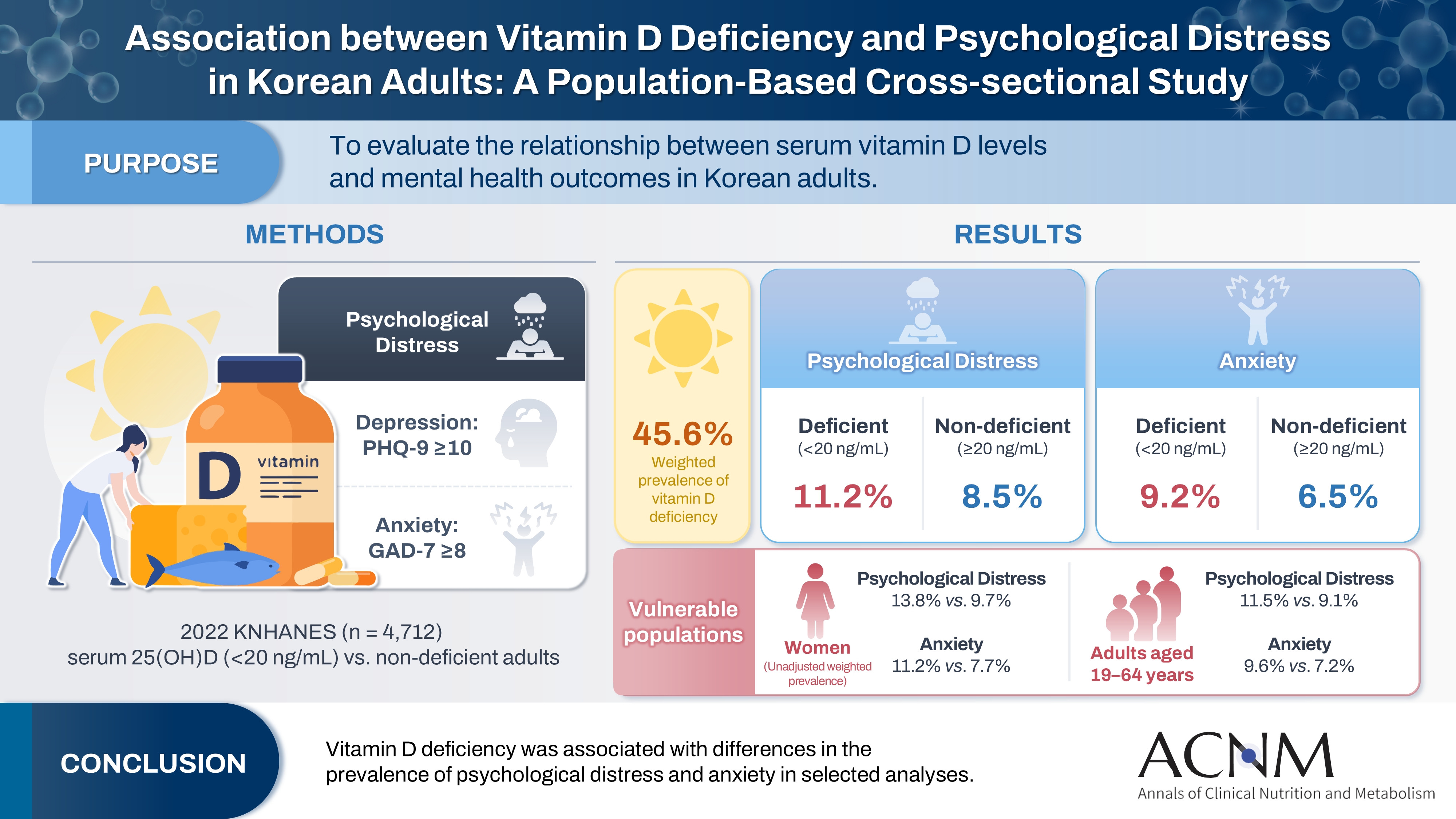
Vitamin D deficiency is prevalent in Korea, but evidence on its association with psychological distress remains limited. This study examined the association between vitamin D levels and psychological distress, depression, and anxiety, among Korean adults.
Methods
This cross-sectional study included 4,712 adults aged ≥19 years from the 2022 KNHANES. Participants were classified as vitamin D-deficient (<20 ng/mL) or non-deficient (≥20 ng/mL) groups. Psychological distress, depression, and anxiety were assessed using the Patient Health Questionnaire-9 and Generalized Anxiety Disorder-7. Multivariable logistic regression was used to estimate adjusted odds ratios for these outcomes according to vitamin D status.
Results
The weighted prevalence of vitamin D deficiency was 45.6%. Unadjusted analyses showed higher prevalences of psychological distress (11.2% vs. 8.5%; P=0.004) and anxiety (9.2% vs. 6.5%; P=0.005) in the deficient group, especially among women and adults aged 19–64 years. After adjustment, the associations were attenuated and not statistically significant in the total population. In age-stratified models, vitamin D deficiency remained significantly associated with psychological distress in adults aged 19–64 years and ≥65 years and with anxiety in adults aged 19–64 years.
Conclusion
Although psychological distress was more prevalent in the vitamin D-deficient group before adjustment, the association was not statistically significant after covariate adjustment in the total population. Subgroup analyses showed higher unadjusted prevalences of psychological distress and anxiety among women with vitamin D deficiency. Adjusted models showed significant associations with psychological distress in both age groups. These findings suggest potential subgroup-specific associations, warranting longitudinal studies to confirm causality.
- 671 View
- 14 Download
- Association between dysphagia diet intake at acute-care discharge and activities of daily living at discharge from a convalescent rehabilitation ward: a single-center retrospective cohort study in Japan
-
Mayu Awata
 , Kotomi Sakai, Nobuo Sakata
 - Ann Clin Nutr Metab 2026;18(2):154-161. Published online July 31, 2026
- DOI: https://doi.org/10.15747/ACNM.26.0048
-
Graphical Abstract
Abstract
PDF
- Purpose
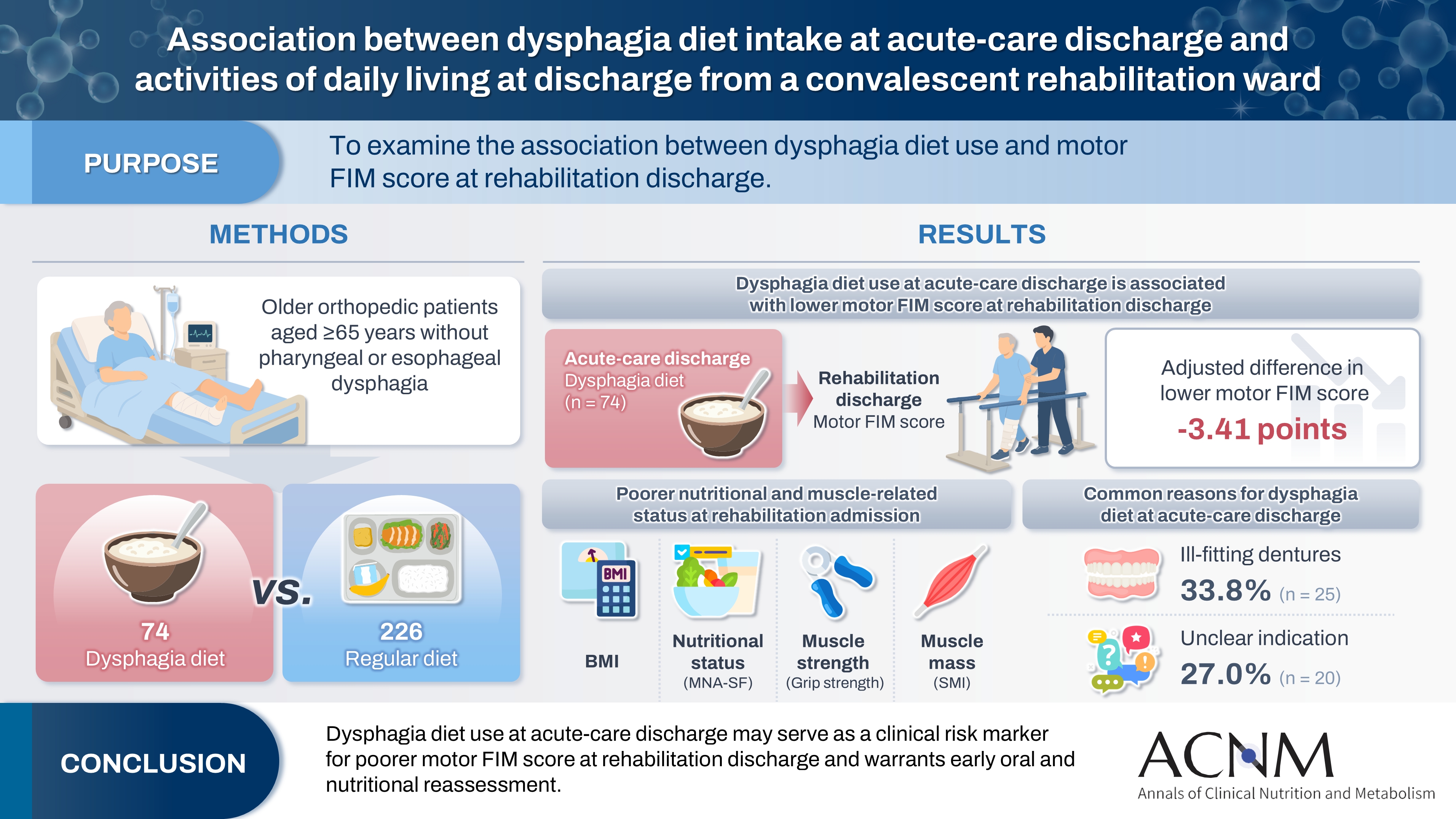
This study examined whether intake of a dysphagia diet at acute-care discharge was associated with activities of daily living (ADL) at discharge from a convalescent rehabilitation ward among older orthopedic patients.
Methods
This retrospective study included patients aged ≥65 years admitted to a convalescent rehabilitation ward between January 2019 and April 2024. Patients with pharyngeal or esophageal dysphagia were excluded. The exposure was dysphagia diet intake at acute-care discharge. Motor Functional Independence Measure (FIM) score at rehabilitation discharge was analyzed using multivariable linear regression adjusted for age, admission motor FIM score, and cognitive function. Nutritional indicators at rehabilitation admission were compared between groups, and reasons for diet modification during acute care were summarized.
Results
Among 300 patients, 74 (24.7%) received a dysphagia diet at acute-care discharge. At rehabilitation admission, the dysphagia diet group had poorer nutritional and muscle-related status than the regular diet group. After adjustment, dysphagia diet intake was associated with a 3.41-point lower motor FIM score at discharge. Ill-fitting dentures were the most common reason for diet modification (33.8%); however, the reason was unclear in 27.0% of cases.
Conclusion
Among older orthopedic patients without pharyngeal or esophageal dysphagia, intake of a dysphagia diet at acute-care discharge was associated with lower ADL at discharge from a convalescent rehabilitation ward after adjustment for selected covariates. This finding should be interpreted as a clinical risk marker rather than evidence that clinically indicated dysphagia diets should be avoided. Early reassessment of diet modifications and correction of reversible oral conditions may help improve rehabilitation care.
- 944 View
- 18 Download
- Association of early parenteral energy provision with serum phosphorus decline and phosphorus-based refeeding syndrome in critically ill patients with liver cirrhosis: a Korean retrospective observational study
-
Jee Young Lee, Yeo Kon Kye, Kwang Il Seo, Kyung Won Seo, Sooyong Lee, Jesang Yu
- Ann Clin Nutr Metab 2026;18(2):162-172. Published online July 31, 2026
- DOI: https://doi.org/10.15747/ACNM.26.0055
-
Graphical Abstract
Abstract
PDF
- Purpose
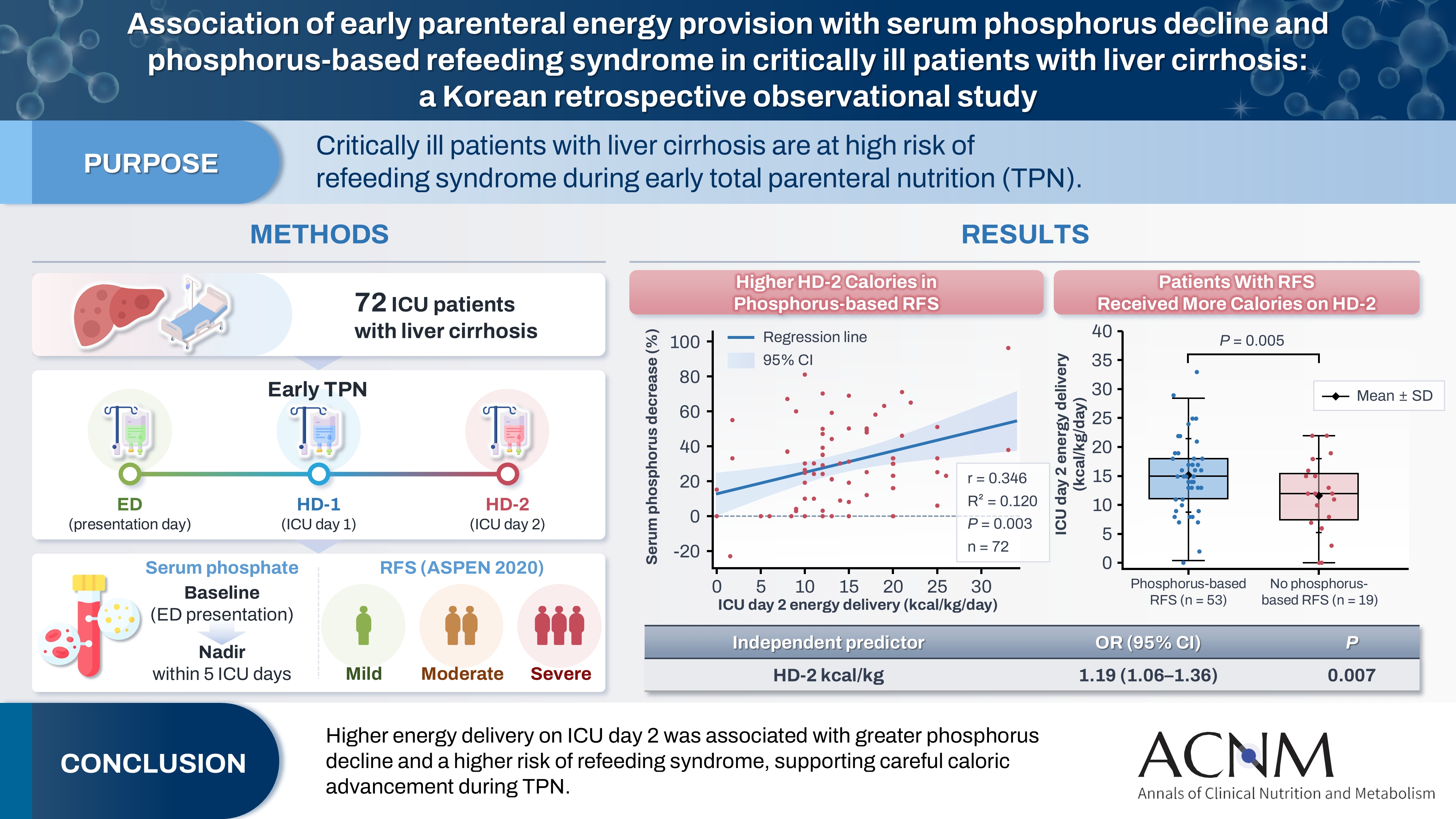
Critically ill patients with liver cirrhosis are vulnerable to malnutrition and refeeding-related electrolyte disturbances, particularly with rapid caloric advancement. As hypophosphatemia is a key feature of refeeding syndrome (RFS) and phosphorus homeostasis may be impaired in cirrhosis, the association of early parenteral energy provision with serum phosphorus decline and RFS was evaluated in cirrhotic ICU patients.
Methods
This retrospective study included 72 adults with liver cirrhosis admitted to a tertiary intensive care unit (ICU) between January 2021 and August 2024. Parenteral energy intake was assessed at emergency department (ED) and on ICU days 1 and 2. Serum phosphorus reduction was defined as the percentage decrease from baseline to the nadir within 5 ICU days. Phosphorus-based RFS was defined per the 2020 ASPEN consensus as a ≥10% phosphorus decrease after reinitiating or increasing energy provision, graded as mild, moderate, or severe.
Results
Phosphorus-based RFS occurred in 53 patients (73.6%), including severe RFS in 35 (48.6%). ICU day 2 caloric intake per body weight correlated with phosphorus reduction (r=0.346, P=0.003) and was independently associated with greater decline (P=0.011) and with meeting RFS criteria (odds ratio, 1.19; 95% CI, 1.06–1.36; P=0.007), along with ED glucose load (P=0.001). ROC analysis showed modest discrimination (AUC 0.7061; cutoff, 10.92 kcal/kg/day).
Conclusion
Higher caloric delivery on ICU day 2 was associated with greater phosphorus decline and RFS in cirrhotic ICU patients. These exploratory associations do not establish causality, and the cutoff requires external validation. Monitoring caloric delivery and serial electrolytes may support safer parenteral nutrition.
- 1,297 View
- 19 Download
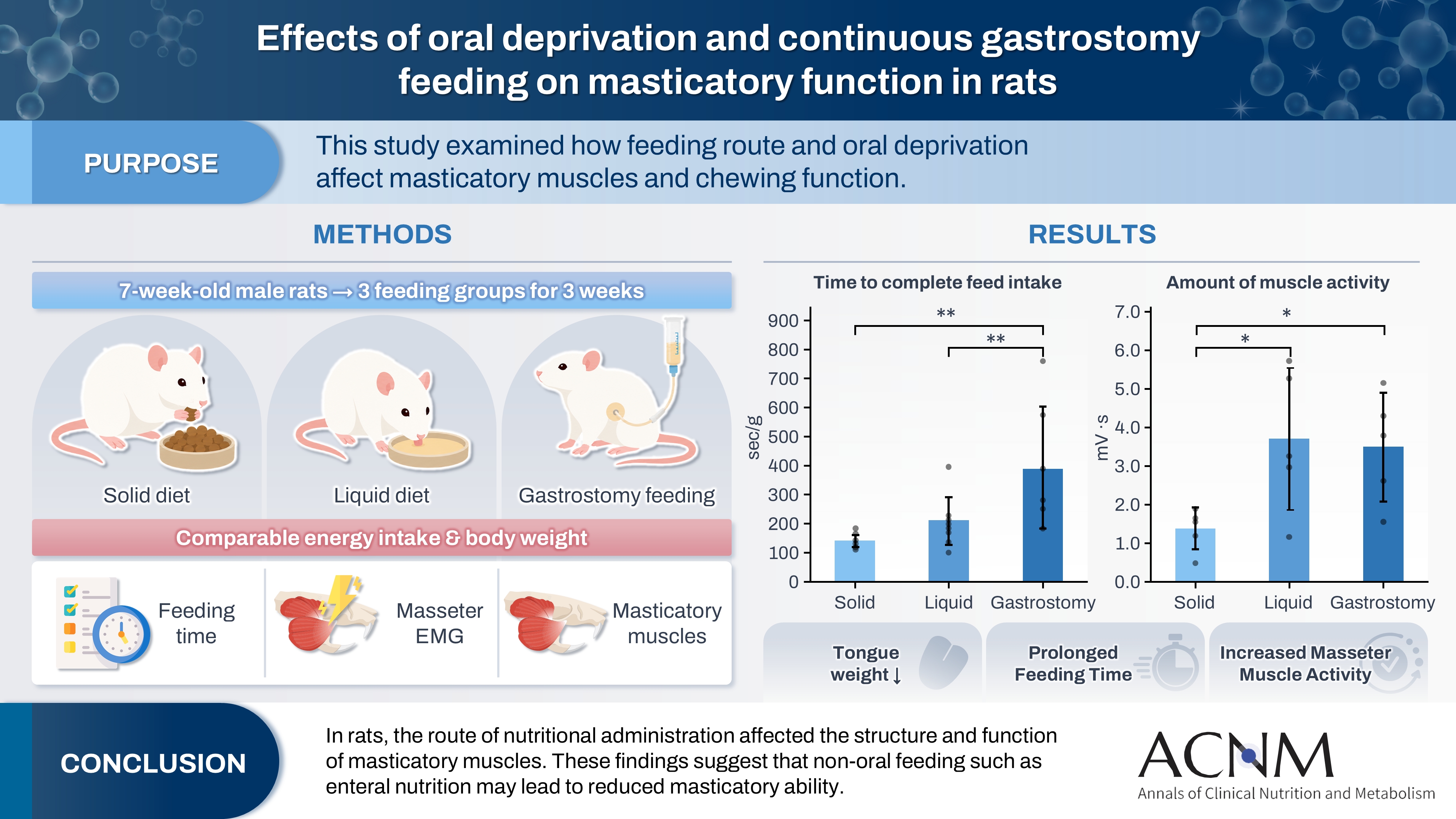
- Effects of oral deprivation and continuous gastrostomy feeding on masticatory function in rats
-
Airi Honjo, Ippei Yamaoka
- Ann Clin Nutr Metab 2026;18(2):173-180. Published online July 31, 2026
- DOI: https://doi.org/10.15747/ACNM.26.0051
-
Graphical Abstract
Abstract
PDF
- Purpose
Tube feeding is frequently used in older adults and patients with dysphagia. However, when oral intake cannot be resumed, masticatory function may decline. Eating provides nutrition and helps maintain oral function, but the effects of different nutritional routes on masticatory muscles remain unclear. This study investigated the effects of a feeding model that combined differences in feeding route, diet form, and oral deprivation on masticatory-related muscles and masticatory function.
Methods
Seven-week-old male Sprague–Dawley rats were assigned to receive a solid diet (solid group), a liquid diet (liquid group), or continuous gastric feeding via gastrostomy (gastrostomy group) for 3 weeks. The time required to complete feed intake, masseter electromyographic activity, and masticatory muscles weights were evaluated.
Results
Energy intake and body weight changes did not differ significantly among the groups during the feeding period. Masseter muscle weight was significantly lower in the liquid group than in the other groups, whereas temporalis muscle weight tended to be higher in the solid group. The time required to complete feed intake was significantly longer in the gastrostomy group (389.7±210.4 sec/g) than in the solid and liquid groups (140.0±21.4 and 207.8±82.2 sec/g, respectively; P<0.01). When solid food was consumed after the 3-week feeding period, muscle activity during eating was higher in both the liquid and gastrostomy groups than in the solid group.
Conclusion
Feeding models involving oral deprivation or gastrostomy feeding altered masticatory-related muscle characteristics and chewing performance in rats. Reduced feeding activity may contribute to impaired chewing and changes in tongue weight.
- 579 View
- 9 Download
Case Report
- Metabolic deterioration in a patient with refractory status epilepticus complicated by refeeding syndrome: a case report
-
Manju Mathew, Karthiraj Natarajan
- Ann Clin Nutr Metab 2026;18(2):181-186. Published online July 31, 2026
- DOI: https://doi.org/10.15747/ACNM.25.0042
-
Abstract
PDF
- A 50-year-old moderately built woman with hypothyroidism presented with acute-onset headache, neck pain, vomiting, and transient confusion. She developed seizures in the emergency department requiring intubation. She was subsequently reintubated for refractory status epilepticus, requiring propofol infusion to achieve burst suppression. During her initial intensive care unit course, she had hypoalbuminemia and persistent hypokalemia. Following the initiation of enteral feeding and propofol infusion, she developed metabolic abnormalities suggestive of refeeding syndrome, including severe hypophosphatemia, feed intolerance, and glucose intolerance. A detailed dietary history suggested chronic malnutrition, possibly related to anorexia nervosa. She also exhibited features consistent with propofol infusion syndrome, including hypothermia, elevated lactate, and hemodynamic instability. The interplay between propofol use and refeeding syndrome appeared to trigger a cascade of complications, including worsening hypotension, hyperlactatemia, rhabdomyolysis, hepatic and renal failure, and ultimately fatal cardiac arrest. Refractory status epilepticus requiring propofol infusion, in the context of carbohydrate deprivation and critical illness, may have contributed to catastrophic metabolic deterioration. This case highlights the complexity of metabolic disturbances in critically ill patients and underscores the importance of considering multiple overlapping mechanisms when evaluating clinical deterioration in this setting.
- 291 View
- 9 Download
 First
First Prev
Prev


